Blog

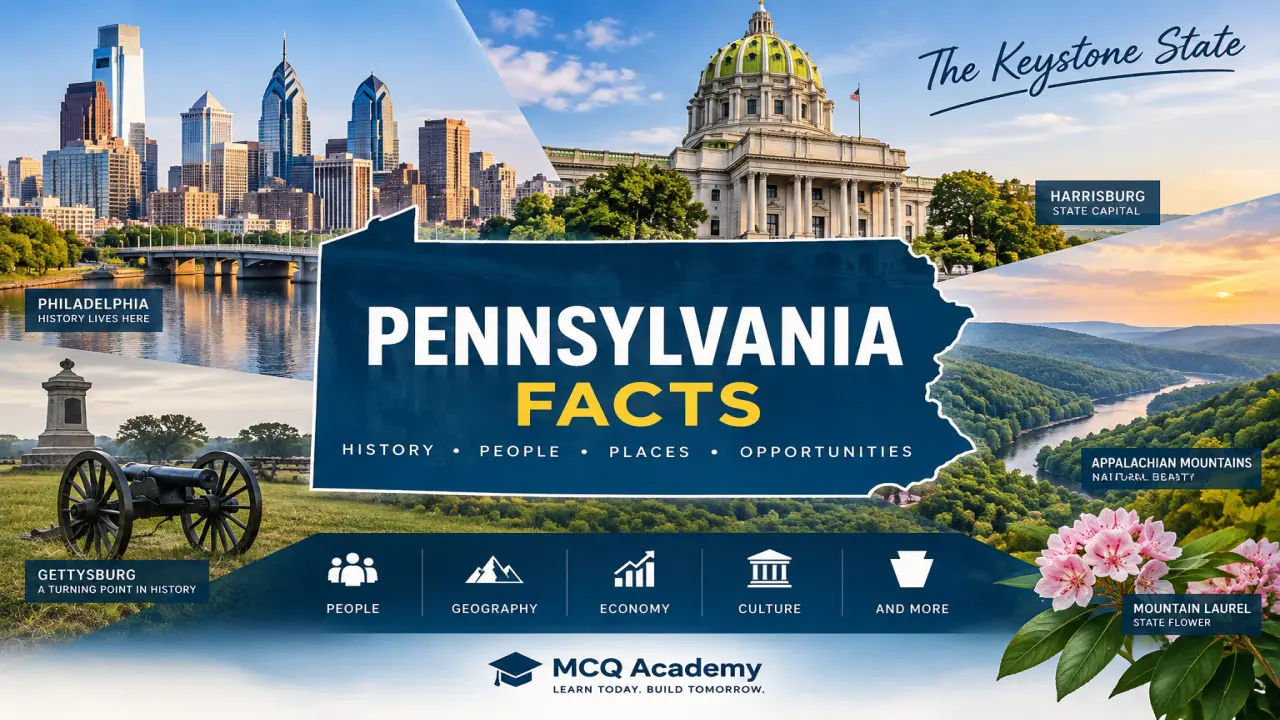
Pennsylvania Facts: Capital, Major Cities, Geography & Economy

Pennsylvania is one of the most historically important states in the United States, but its significance goes well beyond Philadelphia, the American Revolution, and the steel mills of Pittsburgh. The state crosses several major geographic regions, connects the Atlantic side of the country with the Appalachian interior and Lake Erie, and has a large, diversified modern economy.

Harrisburg is the capital of Pennsylvania, while Philadelphia is its largest city. Pennsylvania was the second state to ratify the U.S. Constitution, on December 12, 1787. Its history includes William Penn’s colonial settlement, the Declaration of Independence, the Constitutional Convention, Valley Forge, the Battle of Gettysburg, coal and steel production, and the growth of major cities and industries.

This Pennsylvania facts guide covers the state’s capital, major cities, population, geography, climate, economy, GDP, history, landmarks, state symbols, and other information useful for students, teachers, quiz learners, and general readers.

Quick Facts About Pennsylvania

FactInformation
State namePennsylvania
Traditional designationCommonwealth of Pennsylvania
Postal abbreviationPA
CapitalHarrisburg
Largest cityPhiladelphia
U.S. Census regionNortheast
U.S. Census divisionMiddle Atlantic
StatehoodDecember 12, 1787
Statehood order2nd
Total areaAbout 46,054 square miles
Land area44,742.27 square miles in the 2020 Census geographic data
Population13,059,432 – U.S. Census Bureau estimate for July 1, 2025
Population rank5th among the states – Vintage 2025 estimates
2020 population density290.6 people per square mile
Counties67
NicknameThe Keystone State
MottoVirtue, Liberty and Independence
State birdRuffed grouse
State flowerMountain laurel
State treeEastern hemlock
State animalWhite-tailed deer
State fishBrook trout
Highest pointMount Davis – 3,213 feet above sea level
Major riversDelaware, Susquehanna, Allegheny, Monongahela, and Ohio
Time zoneEastern Time

The words “state” and “commonwealth” do not give Pennsylvania different legal status from other U.S. states. “Commonwealth” is a traditional designation also used by Kentucky, Massachusetts, and Virginia.

Continue reading “Pennsylvania Facts: Capital, Major Cities, Geography & Economy”
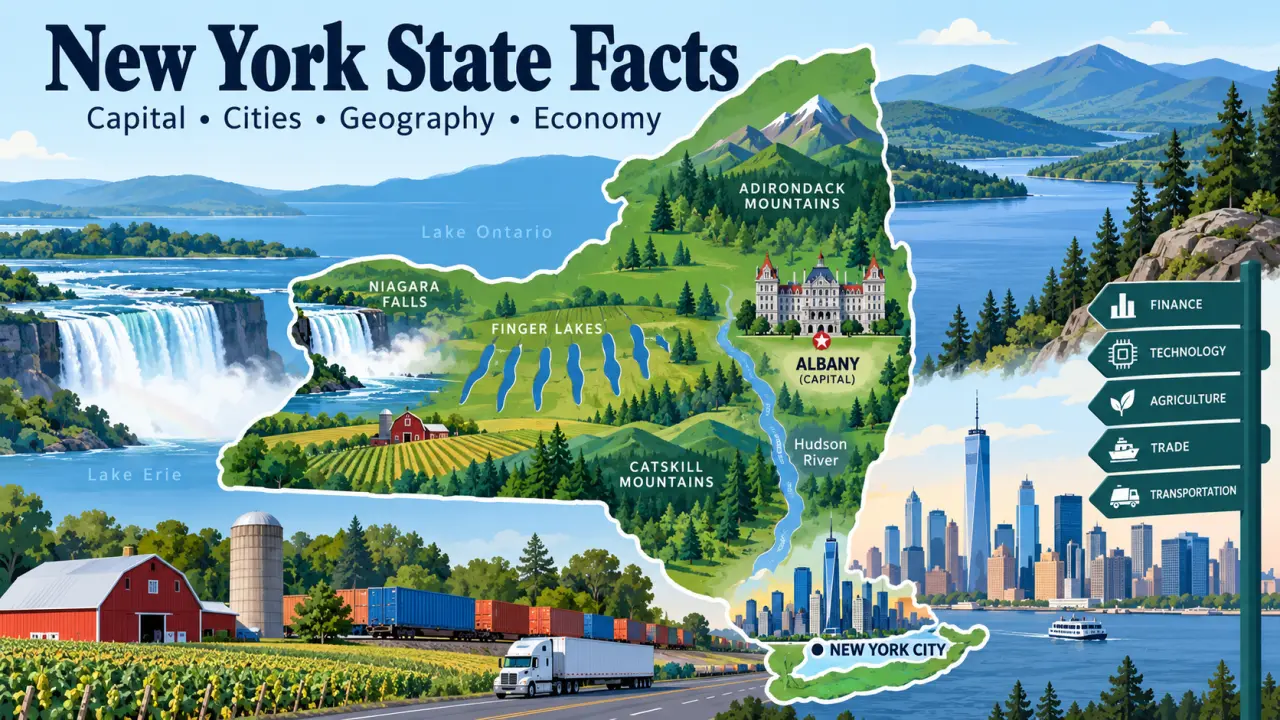

New York State Facts: Capital, Major Cities, Geography & Economy

New York State is often pictured through New York City – skyscrapers, Wall Street, Broadway and millions of people packed into a small part of the state. That picture is important, but it is far from complete. New York stretches from the Atlantic coast and Long Island to the Canadian border and from the Hudson Valley west to Lake Erie.

Across that distance are the Adirondack and Catskill mountains, the Finger Lakes, major river valleys, productive farmland, forests, Great Lakes shorelines and cities with very different histories and economies. Albany is the capital, while New York City is the largest city.

This guide looks at New York State as a whole – its geography, capital, major cities, population, economy, GDP, history, government, education, landmarks and state symbols. It is designed as a reference for students, teachers, quiz learners and anyone who wants to understand how the different parts of New York fit together.

Quick Facts About New York State

FactNew York State
Official nameState of New York
Postal abbreviationNY
CapitalAlbany
Largest cityNew York City
U.S. regionNortheastern United States
StatehoodJuly 26, 1788
Order of statehood11th
Land area47,123.4 square miles
Water area7,435.1 square miles
Total areaAbout 54,558.5 square miles
Population20,002,427 – July 1, 2025 Census estimate, Vintage 2025
Population rank4th – July 1, 2025 Census estimates
Approximate population densityAbout 424.5 people per square mile of land, using the 2025 population estimate
Counties62
NicknameThe Empire State
Words on the current state arms“Excelsior” and “E pluribus unum”
Highest pointMount Marcy – 5,344 feet
Great Lakes bordering the stateLake Erie and Lake Ontario
Time zoneEastern Time
State birdEastern bluebird
State mammalBeaver
State flowerRose
State treeSugar maple

The U.S. Census Bureau estimated New York’s population at 20,002,427 on July 1, 2025. In the same Vintage 2025 series, California, Texas and Florida ranked ahead of New York in population.

Continue reading “New York State Facts: Capital, Major Cities, Geography & Economy”
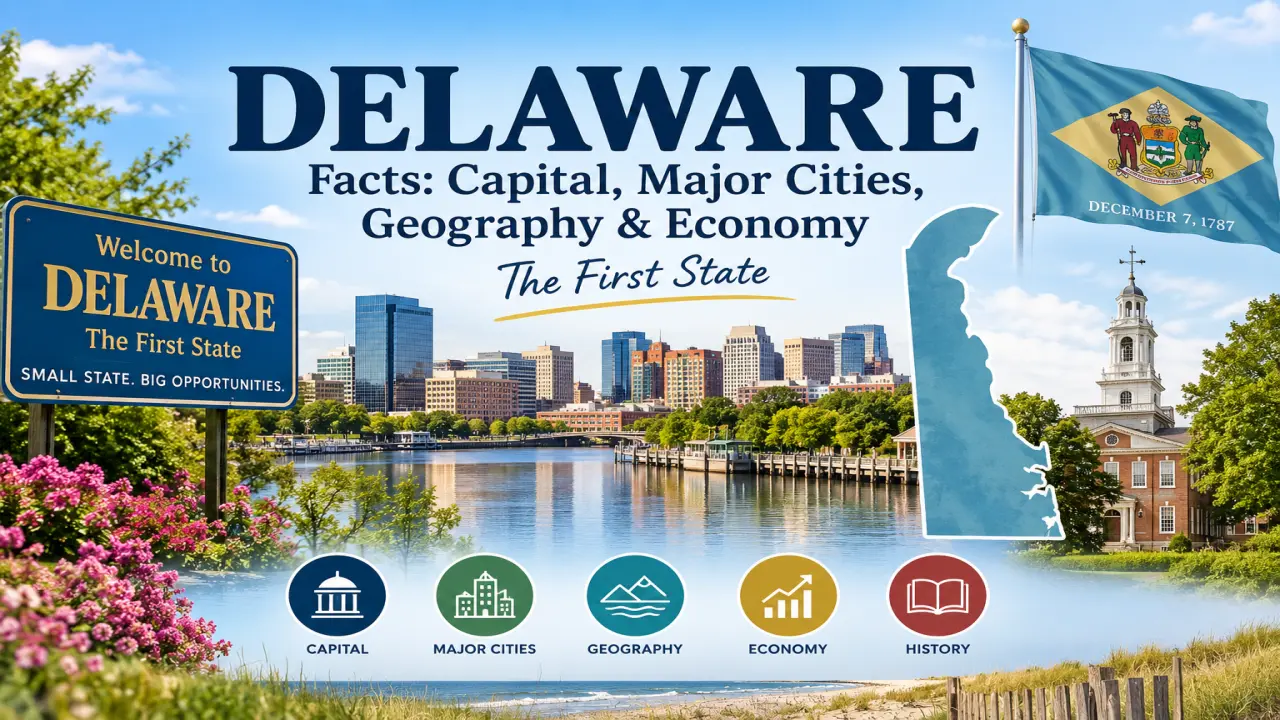
Connecticut Facts: Capital, Major Cities, Geography & Economy

Connecticut is one of the smallest U.S. states by area, but a lot is packed into its borders. It has a coastline on Long Island Sound, wooded hills in the northwest, the Connecticut River running through the middle of the state, old New England towns, major universities, and cities closely tied to the economies of New York and Boston.

Hartford is the state capital, while Bridgeport is the most populous city. Connecticut is also known for insurance, aerospace and defense manufacturing, submarine construction, higher education, and a colonial history that helped give it the official nickname “The Constitution State.”

Here are the key Connecticut facts, from its geography and major cities to population, economy, GDP, history, landmarks, state symbols, and government.

Quick Connecticut Facts for Students and Learners

Official nameState of Connecticut
Postal abbreviationCT
CapitalHartford
Largest cityBridgeport
U.S. regionNew England, Northeastern United States
StatehoodJanuary 9, 1788
Order of statehood5th state
Official nicknameThe Constitution State
State mottoQui Transtulit Sustinet — “He Who Transplanted Still Sustains”
Total areaAbout 5,544 square miles
Land areaAbout 4,842.5 square miles
Population3,688,496, estimated July 1, 2025
Population rank29th among the 50 states
Estimated population density761.7 people per square mile in 2025
Historical counties8
Current Census county equivalents9 planning regions
Number of towns169
Highest pointSouth slope of Mount Frissell, about 2,380 feet
Lowest pointLong Island Sound, sea level
Major riverConnecticut River
Coastal waterLong Island Sound
State birdAmerican robin
State flowerMountain laurel
State treeWhite oak
State animalSperm whale
Time zoneEastern Time

The name Connecticut comes from an Indigenous name commonly rendered as Quinnehtukqut, referring to the long tidal river that became known as the Connecticut River.

Continue reading “Connecticut Facts: Capital, Major Cities, Geography & Economy”
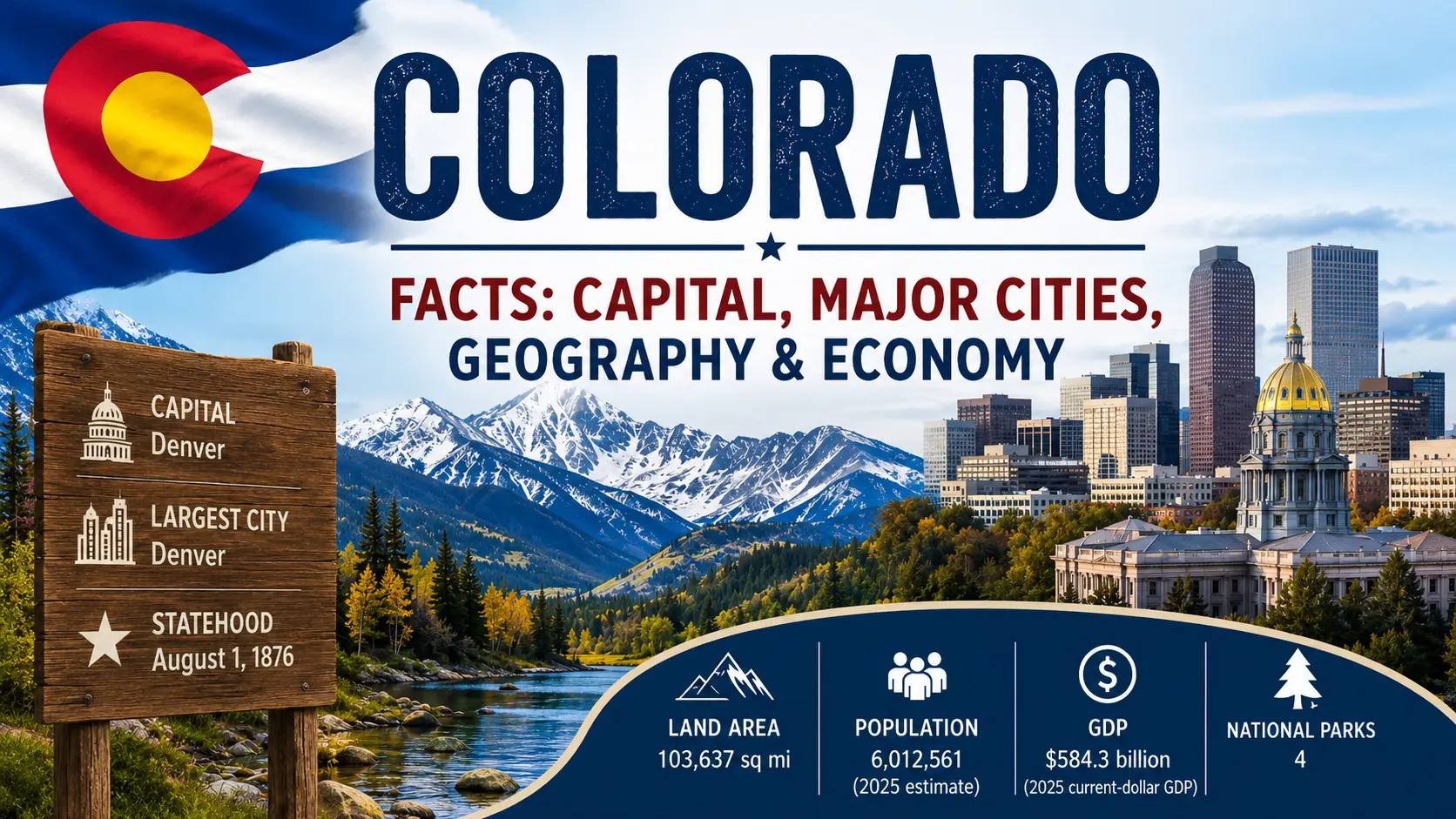
Delaware Facts: Capital, Major Cities, Geography & Economy

Delaware sits on the eastern edge of the United States between the large cities of the Northeast and the farms, wetlands, bays, and beaches of the Delmarva Peninsula. It is the second-smallest U.S. state by area, yet it has played an unusually large role in American history, corporate law, banking, and finance.

Dover is Delaware’s capital, while Wilmington is its largest city and main financial center. Most of the state is low and flat, with the Atlantic Coastal Plain covering central and southern Delaware and a small stretch of hillier Piedmont terrain in the north.

Delaware is best known as “The First State” because it became the first of the original 13 states to ratify the U.S. Constitution, doing so on December 7, 1787. Today, the state is also known for its business-law system, banking and financial services, poultry farming, Atlantic beaches, and steadily growing population.

Quick Facts About Delaware

FactDelaware
Official nameState of Delaware
Postal abbreviationDE
CapitalDover
Largest cityWilmington
RegionMid-Atlantic
NicknameThe First State
MottoLiberty and Independence
U.S. Constitution ratifiedDecember 7, 1787
Statehood order1st
Land areaAbout 1,949 square miles
Population1,059,952 — July 1, 2025 estimate
Counties3
Counties by nameNew Castle, Kent, and Sussex
Highest pointEbright Azimuth
Highest elevationAbout 448 feet above sea level
Lowest elevationSea level
State birdBlue Hen chicken
State flowerPeach blossom
State treeAmerican holly
State colorsColonial blue and buff
State song“Our Delaware”
Time zoneEastern Time
Major bodies of waterDelaware River, Delaware Bay, Atlantic Ocean

The U.S. Census Bureau lists Delaware’s 2020 land area at 1,948.55 square miles. The state is about 96 miles from north to south and ranges from roughly 9 to 35 miles wide.

Continue reading “Delaware Facts: Capital, Major Cities, Geography & Economy”
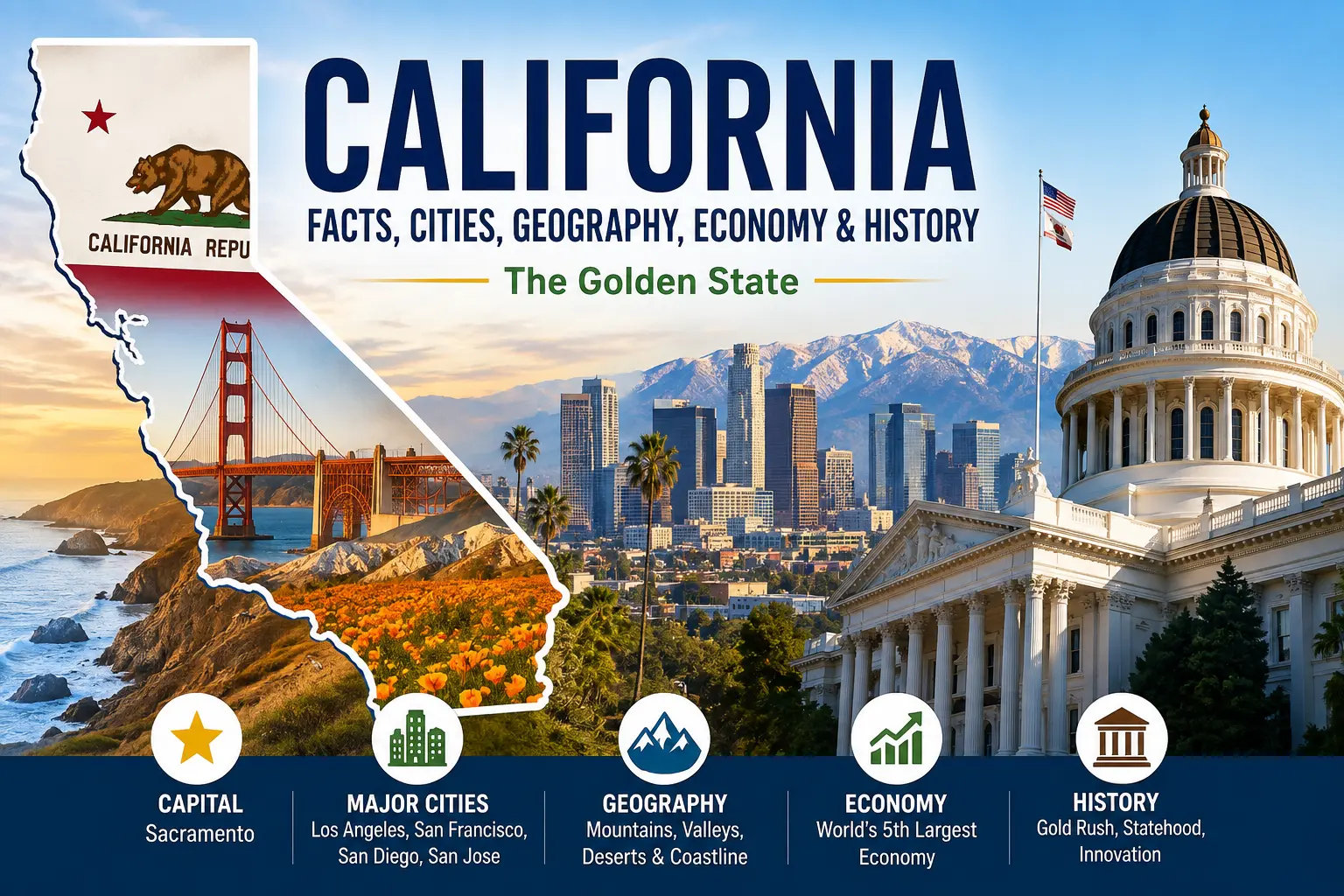
Colorado Facts: Capital, Major Cities, Geography & Economy

Colorado is a state of striking contrasts. Snow-covered Rocky Mountain peaks rise above broad valleys, while the eastern third of the state opens onto the Great Plains. Denver is a major city and transportation center, yet large parts of western Colorado are made up of mountains, forests, canyons, plateaus, and small communities.

Those landscapes have shaped Colorado’s history and its economy. Mining helped bring waves of newcomers in the nineteenth century. Farming and ranching remain important, especially on the plains and in western valleys. Today, technology, aerospace, tourism, energy, healthcare, finance, manufacturing, agriculture, and federal research all have substantial roles in the state.

This guide covers the essential facts about Colorado, including its capital, major cities, geography, population, economy, GDP, history, national parks, landmarks, and state symbols.

Continue reading “Colorado Facts: Capital, Major Cities, Geography & Economy”

California Facts: Capital, Major Cities, Geography & Economy

California is a state of contrasts. Snow-covered mountains rise above dry deserts, rich farmland stretches through the Central Valley, and a long Pacific coastline connects major cities with some of the busiest trade routes in the world. It is home to Hollywood, Silicon Valley, Yosemite, Death Valley, giant redwoods, productive farms, major universities, and nearly 40 million people.

California is also one of the most important states in the United States by population and economic output. Sacramento is the state capital, while Los Angeles is its largest city. California’s economy reaches far beyond entertainment and technology: agriculture, manufacturing, international trade, tourism, professional services, life sciences, transportation, and many other industries all play major roles.

This guide covers the essential facts about California, including its capital, major cities, geography, population, economy, GDP, history, landmarks, state symbols, and useful facts for students.

Continue reading “California Facts: Capital, Major Cities, Geography & Economy”
How to Shorten the cwebp Command in Linux Mint with a Bash Function

I usually optimize images locally before uploading them to the live servers for my websites. Since I use Linux Mint, one of my regular tools for this job is cwebp, which I run directly from the command line to convert PNG and JPG images to WebP.

My most-used command is simple:

cwebp image-name.png -o image-name.webp

It works well, but after using it again and again, I started looking for a way to avoid typing the same filename twice every time I converted an image. When filenames are long, that small repetition becomes even more annoying.

Because I already use the Linux terminal for this task, I wanted a solution that would stay simple and keep using cwebp rather than adding another application. I solved it by creating a small Bash function called towebp.

Continue reading “How to Shorten the cwebp Command in Linux Mint with a Bash Function”

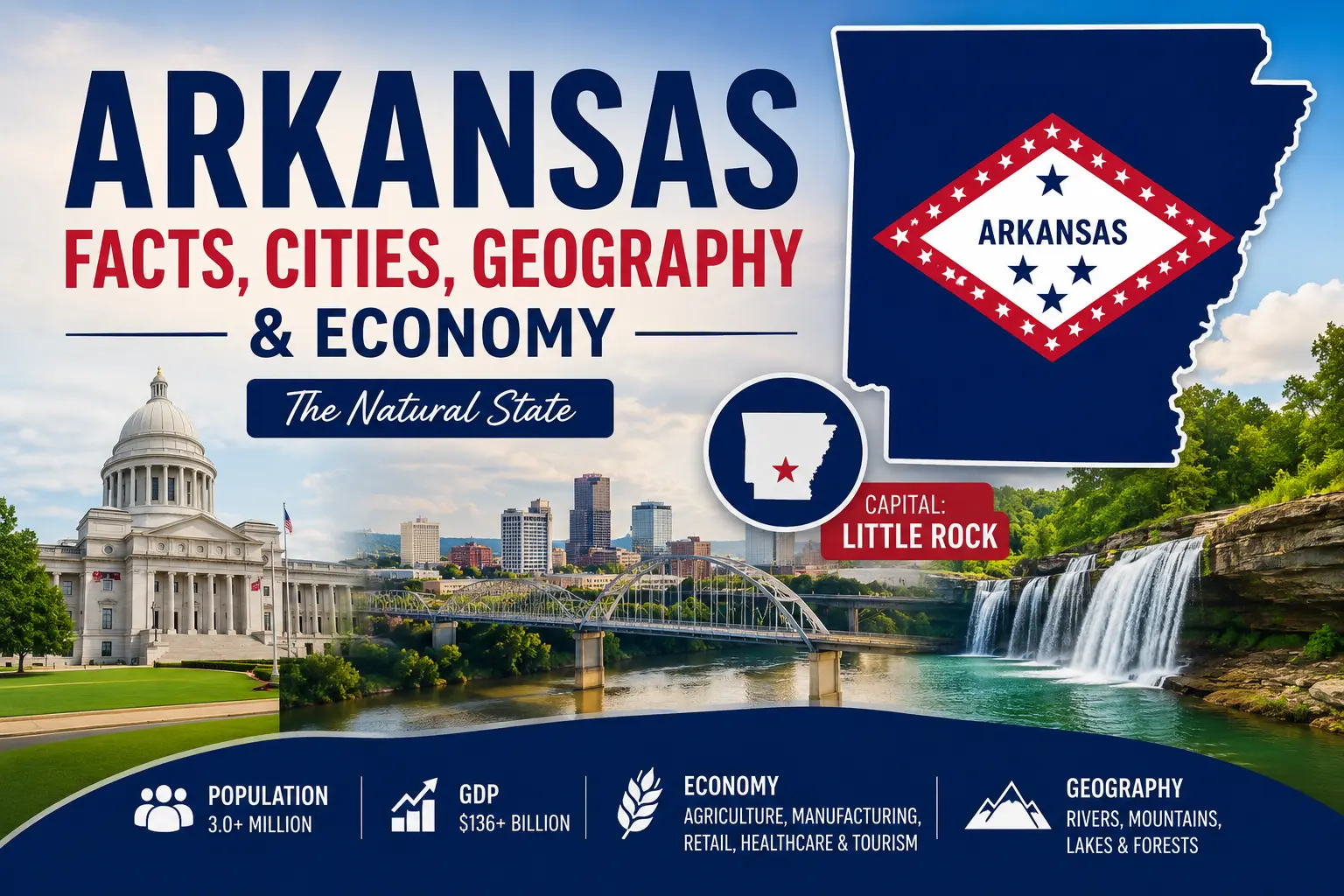
Arkansas Facts: Capital, Major Cities, Geography & Economy

Arkansas is a state where mountain country, broad river valleys, forests, farmland, and fast-growing cities all meet. Located in the south-central United States, it stretches from the Ozark and Ouachita mountains to the flat, fertile lands along the Mississippi River. Little Rock is both the state capital and its largest city, while Northwest Arkansas has become one of the state’s busiest centers for population growth, education, retail, food production, and transportation.

Arkansas is also deeply tied to American history. It entered the Union in 1836, played an important role in the Civil War, and later became the setting for one of the defining school-desegregation struggles of the Civil Rights Movement. Today, the state’s economy mixes agriculture and manufacturing with retail, logistics, healthcare, tourism, and other services.

This guide covers the most useful Arkansas facts, including its capital, major cities, geography, population, economy, GDP, history, landmarks, state symbols, and facts students are likely to encounter in school or general-knowledge quizzes.

Continue reading “Arkansas Facts: Capital, Major Cities, Geography & Economy”
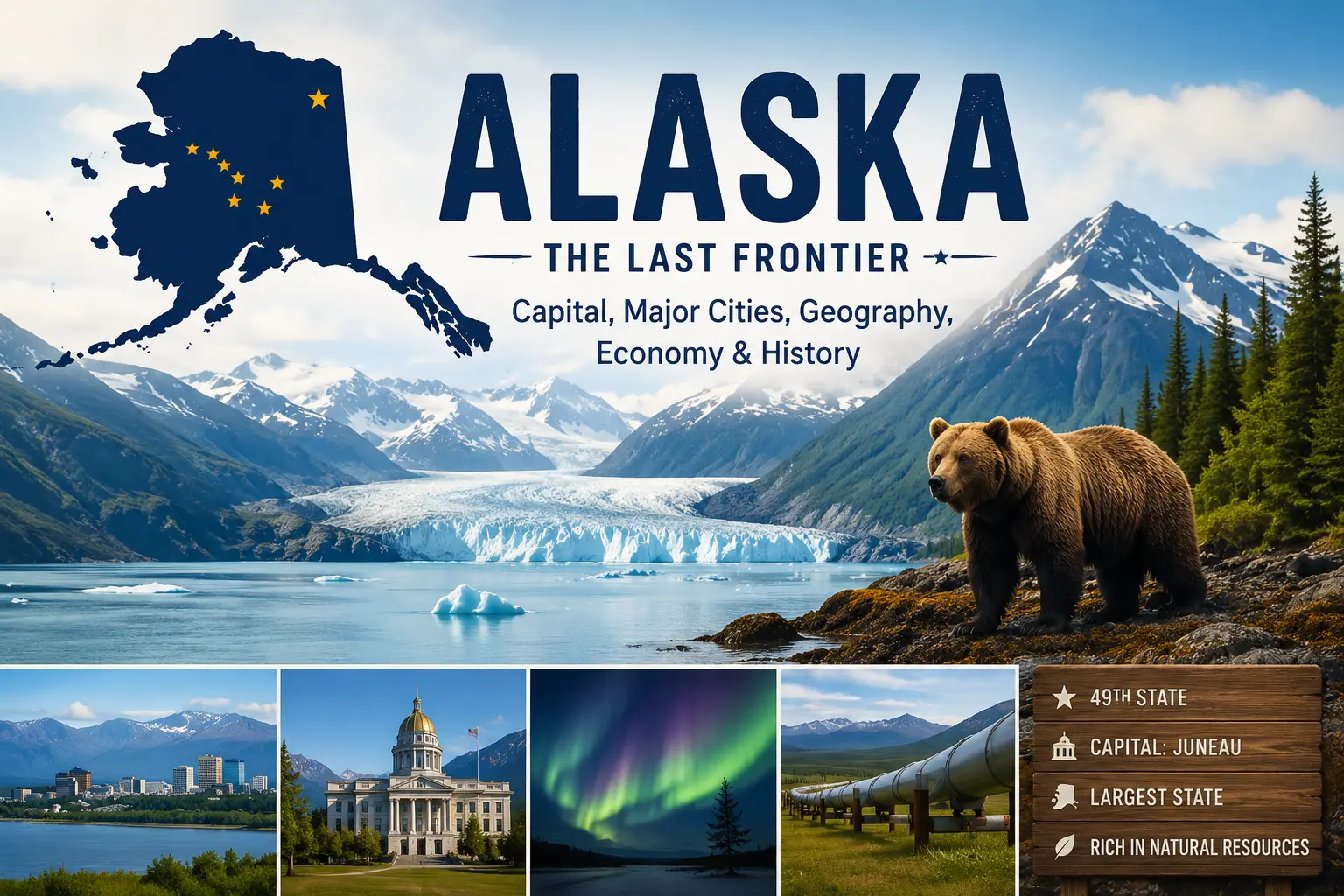
Alaska Facts: Capital, Major Cities, Geography, Economy & History

Alaska is unlike any other U.S. state. It is enormous, sparsely populated, and filled with mountains, glaciers, forests, tundra, rivers, islands, and long stretches of coastline. It sits at the far northwestern edge of North America, separated from the lower 48 states by Canada.

Juneau is the capital of Alaska, while Anchorage is the largest city and home to the biggest share of the state’s population. Alaska is also known for its Alaska Native cultures, oil fields, fishing industry, national parks, wildlife, and North America’s highest mountain.

In this guide, you’ll learn the most important facts about Alaska, including its geography, cities, population, history, economy, GDP, natural resources, landmarks, and state symbols.

Data last reviewed: August 2026. Population figures are based on the latest available U.S. Census Bureau estimates, and GDP figures come from the U.S. Bureau of Economic Analysis.

Continue reading “Alaska Facts: Capital, Major Cities, Geography, Economy & History”

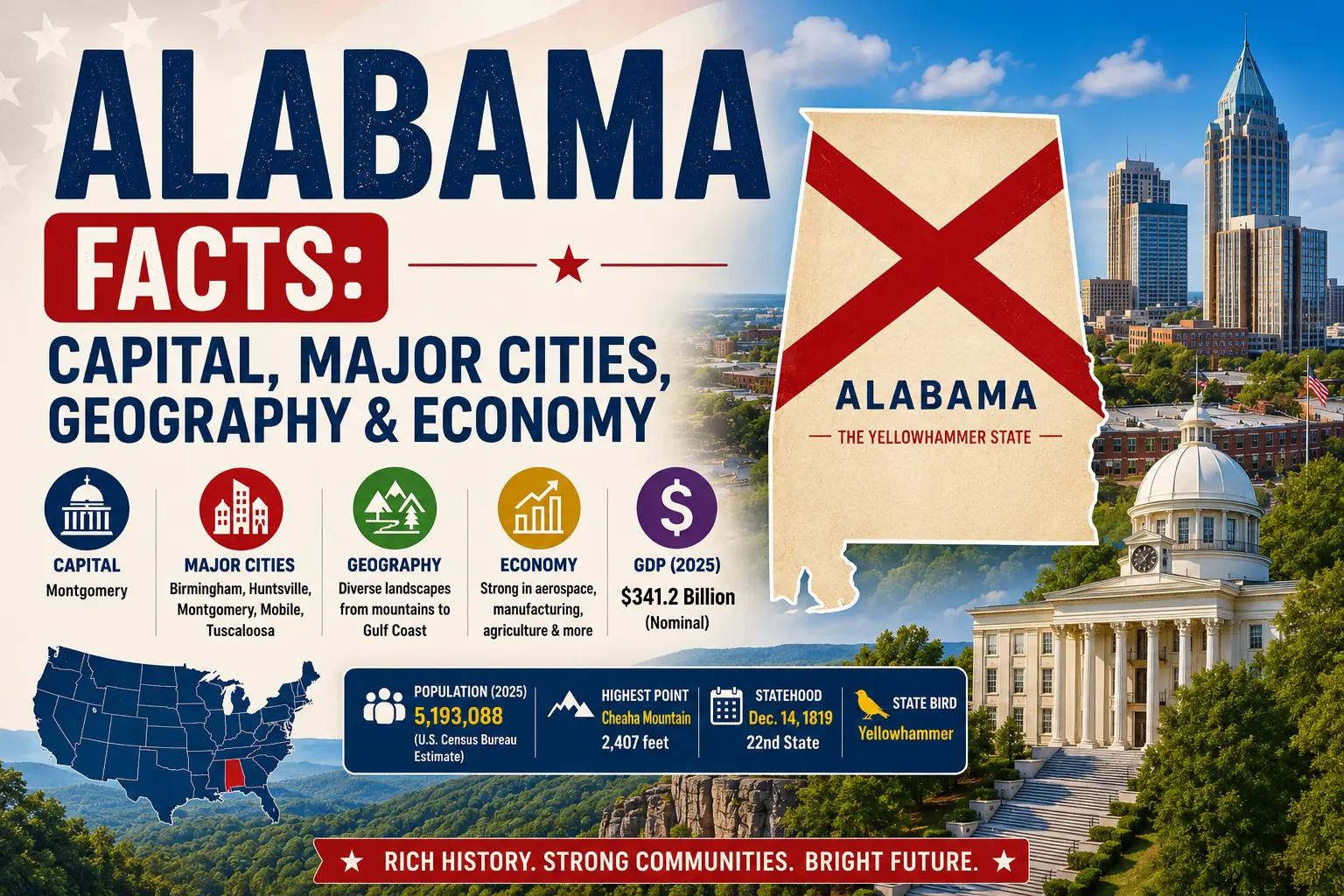
Alabama Facts: Capital, Major Cities, Geography & Economy

Alabama is a state in the Southeastern United States with a landscape that stretches from Appalachian ridges and river valleys in the north to forests, fertile plains, Mobile Bay, and the Gulf Coast in the south. Its capital is Montgomery, while Huntsville is the state’s largest city by the U.S. Census Bureau’s July 1, 2025 population estimate. Alabama is also important to U.S. history because of its Indigenous heritage, cotton and industrial history, major role in the Civil Rights Movement, and modern contributions to aerospace, automotive manufacturing, defense, agriculture, and international trade.

This guide covers essential Alabama facts, including the state’s capital, major cities, population, geography, economy, GDP, history, landmarks, state symbols, and facts students should know.

Data last reviewed: August 2026
Population data: U.S. Census Bureau
Economic and GDP data: U.S. Bureau of Economic Analysis and other cited government sources

Continue reading “Alabama Facts: Capital, Major Cities, Geography & Economy”
How to Install and Uninstall Software on Linux Mint and Debian-Based Linux

Installing software on Linux Mint, Ubuntu, Debian, and other Debian-based Linux distributions is usually simple. However, Linux applications are distributed in several formats, including APT packages, .deb files, Flatpaks, Snaps, AppImages, compressed archives, and source code.

Each format uses a different installation and removal method. For example, an AppImage is normally removed by deleting its file, while an application installed through APT should be removed with an APT command.

This guide explains how to safely install, update, identify, troubleshoot, and uninstall software on Linux Mint and other Debian-based operating systems. It is written for beginners but also includes useful commands for experienced Linux users.

Important Corrections to Common Linux Commands

Before starting, it is important to correct a few common misunderstandings about Linux software installation.

  • A .tar.gz file is a compressed archive. It is not a Snap package.
  • An AppImage is normally a portable executable file. It is not managed by apt or dpkg.
  • To remove an AppImage, you normally delete the AppImage file and any optional shortcuts or settings it created.
  • For a local .deb package, sudo apt install ./package.deb is usually better than sudo dpkg -i package.deb because APT can resolve dependencies.
  • You normally do not need sudo to make an AppImage executable.
  • apt purge removes package-managed configuration files, but it does not normally remove all personal settings from your home directory.
Continue reading “How to Install and Uninstall Software on Linux Mint and Debian-Based Linux”

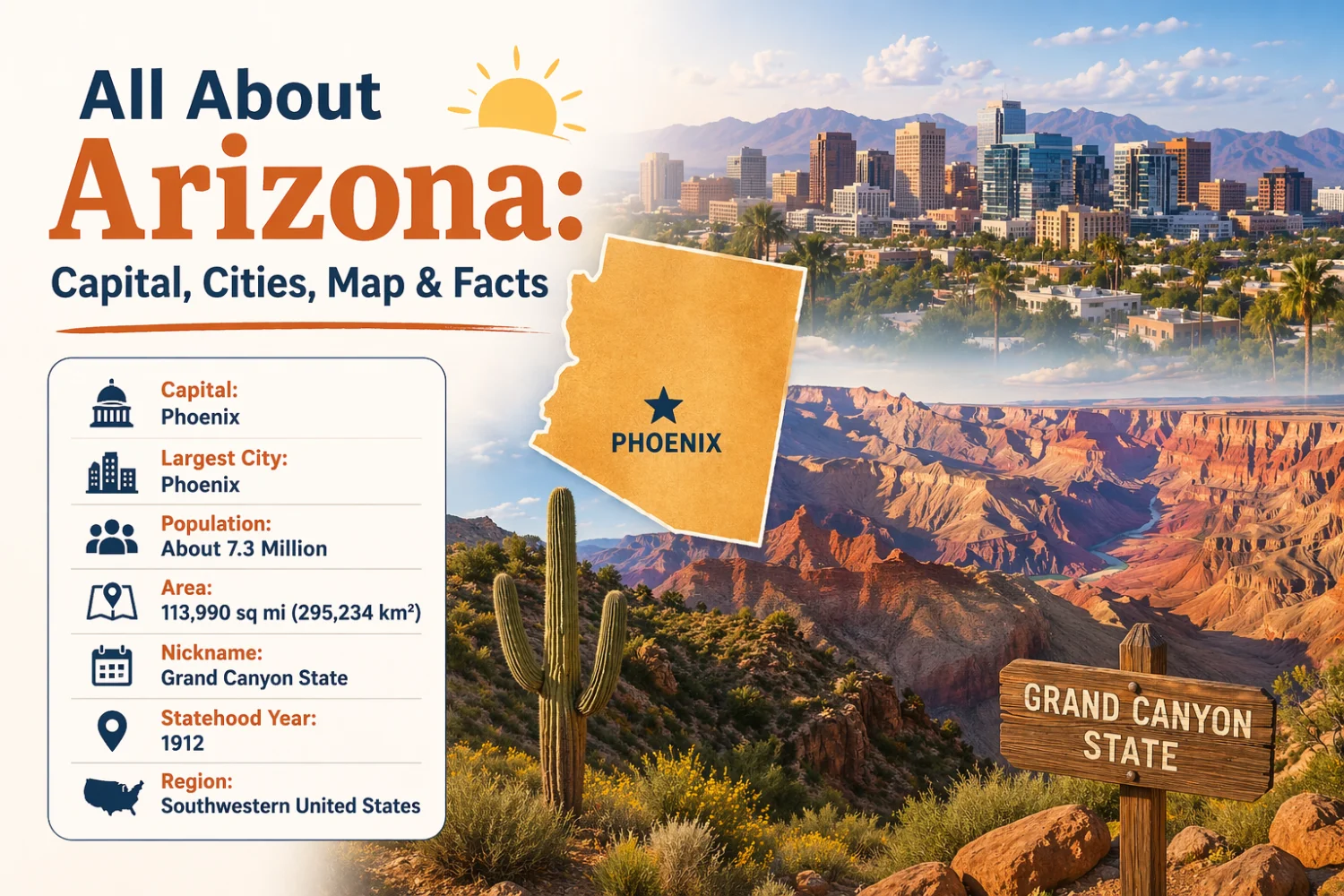
All About Arizona: Capital, Cities, Map & Facts

Quick Facts about Arizona

  • Capital city: Phoenix
  • Largest City: Phoenix
  • Population: About 7.3 million (estimate)
  • Area: 113,990 sq mi (295,234 km²)
  • Nickname: Grand Canyon State
  • Statehood Year: 1912
  • Region: Southwestern United States

Introduction

Arizona is a U.S. state in the southwestern region known for its dramatic desert landscapes, high plateaus and the Grand Canyon. The state combines significant Native American history, rapid urban growth in its lowland valleys, and extensive federally managed public lands. Arizona’s economy relies on sectors such as mining, manufacturing, tourism and technology, while its environments range from hot Sonoran Desert basins to snow-covered mountain peaks.

Location of Arizona

Arizona is located in the southwestern United States. It occupies part of the country’s western interior and extends to the international border with Mexico.

The state borders California to the west, Nevada to the northwest, Utah to the north, Colorado at a single point in the northeast (the Four Corners), and New Mexico to the east. To the south it shares an international border with the Mexican state of Sonora.

Continue reading “All About Arizona: Capital, Cities, Map & Facts”

What to Do After Installing Linux Mint 22.3 (Complete Setup Guide for Beginners & Developers)

If you’ve just installed Linux Mint 22.3 (Cinnamon Edition), this guide will help you transform a fresh installation into a fully functional development and daily-use environment.

This tutorial is especially useful for beginners who want a ready-to-use system for browsing, development, and productivity.


⌨️ 1. Keyboard Language Setup (Bangla + English)

To add multiple keyboard layouts:

  1. Open System Settings
  2. Go to Keyboard
  3. Navigate to Layouts tab
  4. Add:
    • English
    • Bangla (Probhat)

🎯 Shortcut Recommendation

Use:

Super (Windows key) + Space

🚀 2. Install Essential Applications

Open Software Manager and install the following:

📦 Recommended Apps

  • VLC (media player)
  • Brave (privacy-focused browser)
  • Kazam (screen recorder)
  • Geany (lightweight code editor)
  • Discord
  • Telegram
Continue reading “What to Do After Installing Linux Mint 22.3 (Complete Setup Guide for Beginners & Developers)”

The Center of the Universe: Tulsa’s Echoing Enigma

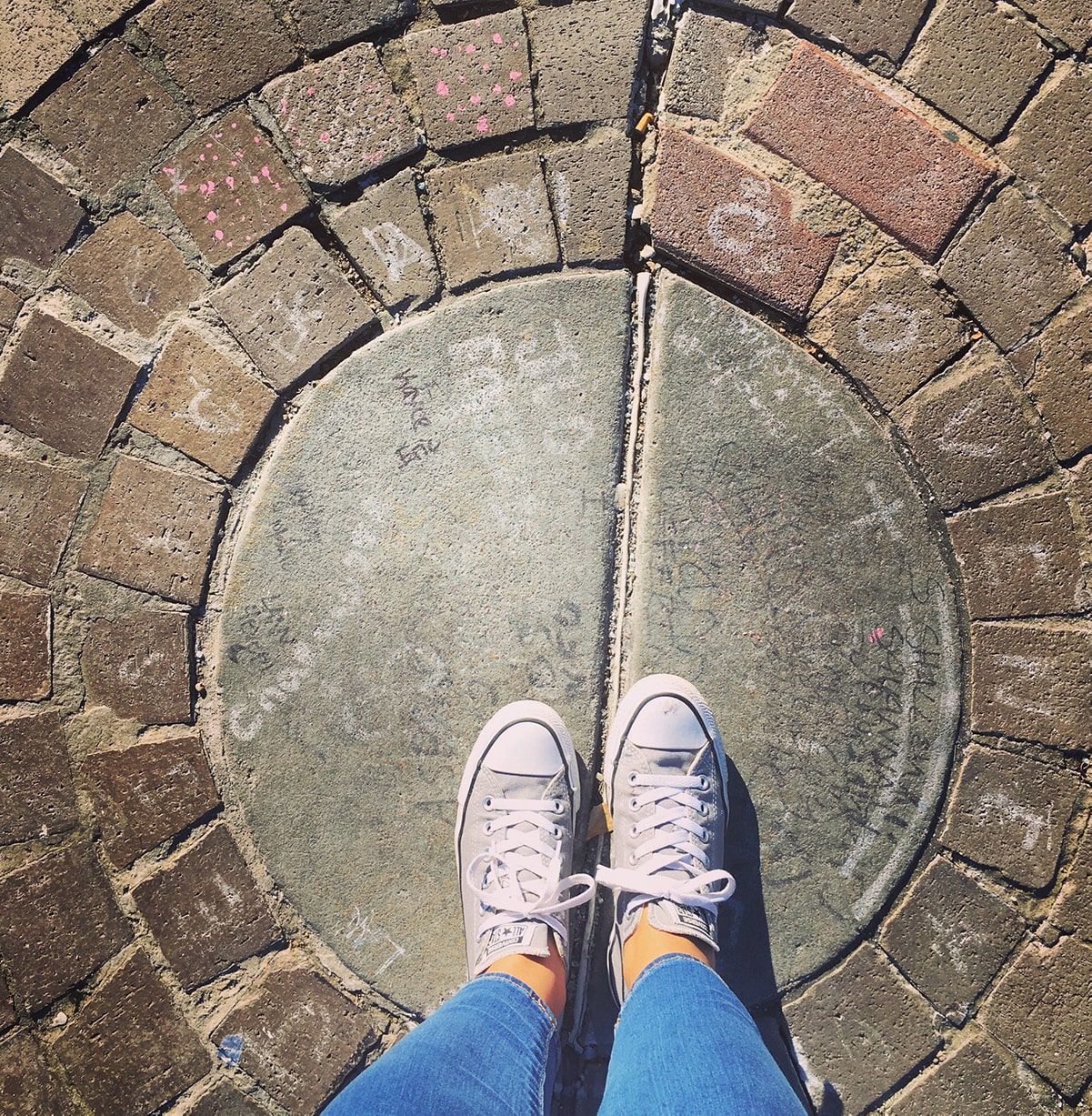
In the heart of Tulsa, Oklahoma, lies a curious acoustic phenomenon called the Center of the Universe. Located on the Boston Avenue Pedestrian Bridge, this seemingly ordinary circular platform, surrounded by a ring of bricks, boasts an extraordinary property: it amplifies and distorts sound.

Standing within the circle’s center, a person’s voice echoes back with surprising intensity, creating a unique and almost private auditory experience. This effect is largely imperceptible to those outside the circle, adding an element of intrigue.

Continue reading “The Center of the Universe: Tulsa’s Echoing Enigma”

What is the difference between Gorge and Canyon?

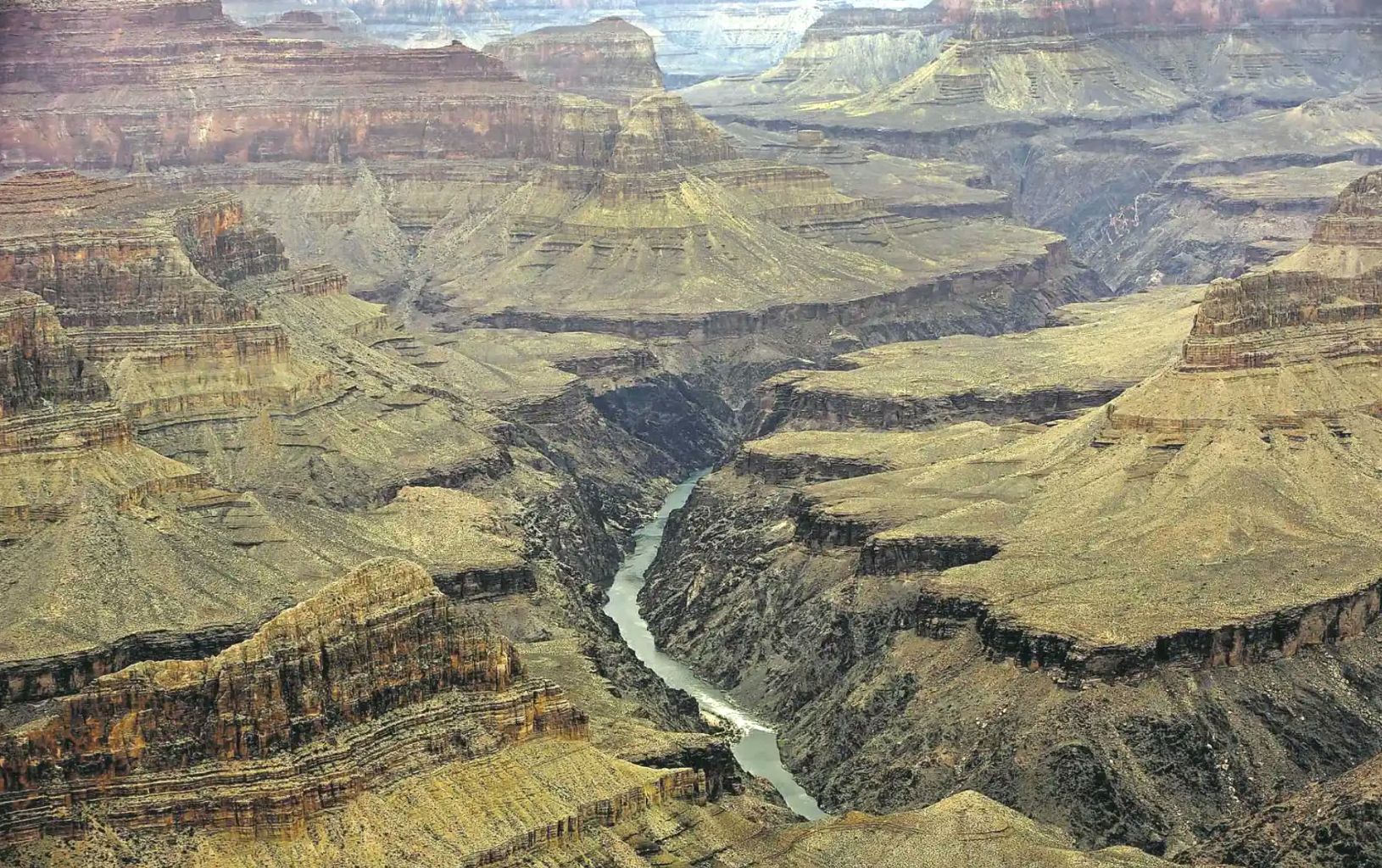
The terms “gorge” and “canyon” both refer to deep valleys with steep sides, often formed by the erosion caused by rivers over time. However, there are a few distinctions between them, particularly in terms of size and geological characteristics:

Definitional difference between gorge and canyon:

  • A gorge is typically a narrow, steep-sided valley that is often smaller and more confined. Gorges are usually formed by rivers cutting through hard rock, creating steep walls on either side. Often used to describe smaller, more dramatic and steep-sided valleys.
  • A canyon is a much larger, wider, and deeper valley with steep cliffs on both sides, often formed over a long period by the erosion caused by rivers. Canyons are typically broader in scale compared to gorges. Used for larger-scale valleys that are wide and deep.
Continue reading “What is the difference between Gorge and Canyon?”

How many States are in the United States of America?

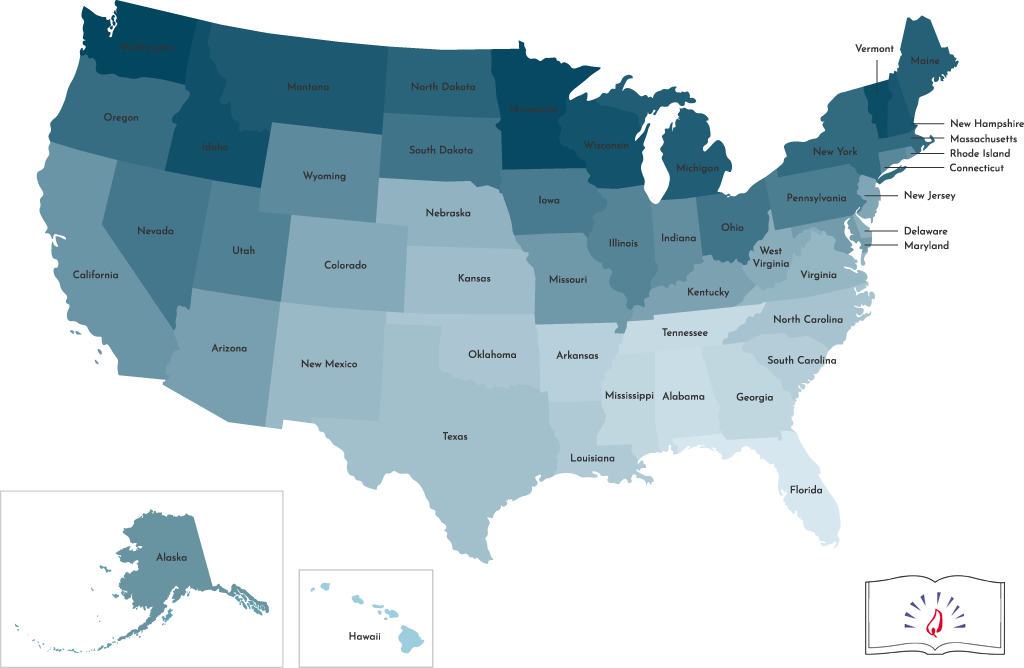
The United States of America is a federation comprising 50 states and the District of Columbia, commonly known as Washington D.C.

Each state functions similarly to a small nation, possessing its own constitution and government. All states and their citizens are represented in the federal Congress, which is a bicameral legislature made up of the Senate and the House of Representatives. Each state has two senators, while the number of representatives is allocated based on the most recent constitutionally required decennial census.

Continue reading “How many States are in the United States of America?”

How to Use Vocabulary in Creative Writing to Make Brilliant Stories

If you want to be a writer or really like writing, it’s important to know that vocabulary in creative writing is very important – as it can help you be the best writer you can be.

Creative writing is the way for people to express themselves and share their imaginative stories with others. It doesn’t follow regular writing rules, so it allows writers to create stories, poems, and essays that deeply connect with the readers emotions. When you are writing in a creative approach, it is very important to have a large and strong set of words that you know and understand well. This allows you to express your thoughts clearly, create strong mental pictures, and provoke feelings in your readers mind.

In this article, we will further discuss the words that can greatly help you to create a well-crafted story. We will give you helpful advice and tips to improve your writing skills – which includes choosing the right words, avoiding using the same words too much, and using good transitions.

Let’s get started?

Continue reading “How to Use Vocabulary in Creative Writing to Make Brilliant Stories”

11 Tips For Parents To Get Your Child Hooked Into Reading in English

At the heart of a child’s academic and personal development lies the ability to read with confidence and comprehension. Reading for kids is a key that must be unlocked at an early age to help them explore a world of knowledge, imagination, and growth.

A strong reading skill must be cultivated from early childhood through frequent practice. Equipping children with good comprehension skills from an early age offers lifelong advantages and creates excellent opportunities for intellectual development. This vital reading skill contributes to improved academic performance and enhances cognitive abilities, setting the stage for a child’s educational development.

As the sun rises on a new era of education, parents, guardians, teachers, and educators are constantly seeking ways to mold young minds into lifelong learners. We understand your desire to do the best for the children around you.

Continue reading till the end, as we delve into the significance of nurturing early English reading skills and explore a guided strategy path that will empower you to guide the young minds on this rewarding journey.

Let’s jump right in?

Continue reading “11 Tips For Parents To Get Your Child Hooked Into Reading in English”